Buying an E36 in 2026 is a minefield if you do not know what to look for. The mechanical checklist — cooling system, subframe, suspension bushes — gets all the attention in forum threads. The interior tells an equally important story about how the car has been kept and what it will cost to live with.
Here is what good looks like, what is fixable, and what should make you walk away or negotiate hard.
THE DASHBOARD
The E36 dashboard cracks. Specifically, the top surface — the section visible through the windscreen from outside — develops hairline cracks that spread into full splits over years of UV exposure and temperature cycling. Pre-facelift cars from before 1996 are worse for this; the later compound is slightly more resilient but not immune.
A crack-free dash on an E36 in 2026 is genuinely uncommon and worth noting. Run your hand across the top of the dash — feel for texture changes and look for hairlines that photographs often miss.
Cost to fix properly: $250–$500 for a quality dash replacement or professional re-cover. An amateur re-glue or dash mat is not a fix — it tells you the previous owner was masking the problem. Factor this into your offer.
HEADLINER
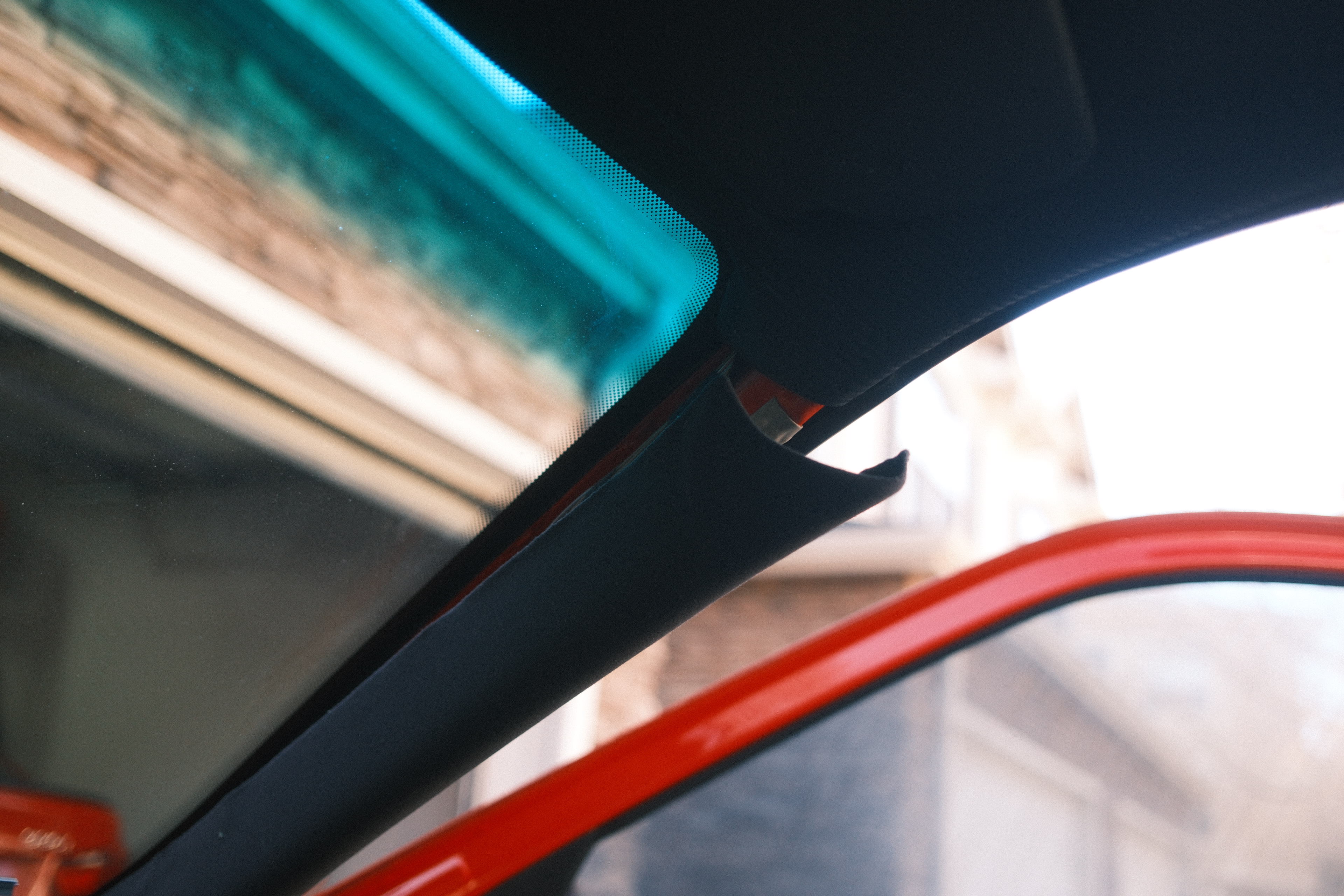
Sagging headliners are near-universal on E36s now. The foam backing that bonds the fabric to the shell decomposes with heat and age, causing the fabric to detach and drop. A headliner that has been re-glued — the common amateur fix — sags again within a year and leaves residue on the fabric.
A fully re-trimmed headliner using new foam and fabric is the only proper solution. DIY cost in materials: $70–$130 and a weekend. Professional re-trim: $200–$320. It is not a red flag on its own, but it is a cost to factor into the overall assessment.
DOOR CARDS
The upper door trim rail — the vinyl-wrapped armrest section where your arm rests when the window is down — warps on almost every E36 now. The backing board delaminate with heat and moisture, causing the vinyl to bubble or lift from the top edge.
This is repairable with a heat gun and contact adhesive if caught early. On a car with significant lifting, the backing board itself needs replacing. Decent used door cards: $80–$180 per pair. On a car you are paying reasonable money for, flagging this in negotiation is entirely appropriate.
SEATS
E36 sport seats — the chairs with the pronounced side bolsters — hold up significantly better than the standard comfort seats. The leather compound is more durable and the bolster shape resists the wear pattern caused by repeated entry and exit.
Inspect the outer bolsters closely. Heavy wear here indicates a high-mileage car or a previous owner who never used seat covers. Look for cracking along the bolster edge and seam separation at the base.
Leather repair for cracked bolsters: $120–$250 per seat at a good upholsterer. Full re-trim: $350–$550 per seat. On a car with sport seats in poor condition, this is a significant cost that many buyers underestimate.
HVAC AND CONTROLS
The E36 climate control and heater system has specific failure points that are worth testing on any inspection:
- Blower motor failure is common — the fan stops working at lower speeds first before failing entirely. Test all blower speed positions.
- Heater core leaks produce a coolant smell inside the car, fogging on the screen, and sometimes a sweet odour under the dashboard. This is a significant repair — $500–$900 at a specialist — and should be a negotiating point.
- Climate control face unit cracking is common on cars with the digital climate system. Replacement units: $40–$90 used.
- Verify hot and cold air both function at temperature. A car that only produces lukewarm air likely has a thermostat or blend door issue.
SPEAKER TRIMS
On cars equipped with the Harman Kardon system, the mid-range speaker bezels are one of the most commonly deteriorated trim pieces you will find. The plastic surround — particularly on the door-mounted mids — becomes brittle with age, developing cracks and chips along the mounting clips and outer edge. Replacements are scarce, and sourcing a clean original set in 2026 is more effort than it is worth.
If the bezels on the car you are inspecting are cracked, broken, or missing altogether, it is worth knowing a 3D-printed replacement is available. The fitment is correct and the finish holds up in a daily environment.
SUNROOF DRAINS
If the car has a sunroof, check the carpets in both front footwells and the boot. The sunroof drain tubes — which run down the A and C pillars — clog with leaf debris and mould over time, redirecting water into the cabin instead of out through the sill.
Clearing the drains is a $20 DIY job with a thin piece of wire or compressed air. Left unaddressed for years, the result is soaked carpet backing, rust forming under the carpet, and potentially damaged ECUs or control modules stored in the footwell area.
The smell test: A musty or mouldy smell inside an E36 is almost always traced to water ingress — sunroof drains, windscreen seal failure, or a leaking heater core. Do not buy a smelly E36 without identifying and confirming the source of the moisture. The remediation cost can exceed the car's value.
What Good Looks Like
- Dash top supple with no cracks
- Headliner flush and firmly attached
- Door card rails flat and well-adhered
- Sport seat bolsters with shape intact
- All HVAC speeds functional, hot and cold confirmed
- Footwells dry, no musty odour
- No coolant smell from the heater
Walk Away or Negotiate Hard
- Severe dashboard cracking with no budget to fix
- Wet footwells or boot with unidentified source
- Musty smell throughout the cabin
- Coolant smell from the heater or foggy screen
- Multiple failed HVAC functions
- Signs of rodent activity under seats or in the boot
THE VERDICT
The E36 interior rewards patience in the search. A well-kept example is a genuinely pleasant place to spend time — solid construction, sensible ergonomics, and a tactile quality that modern interiors rarely match. Find a clean one and you will appreciate it every time you get in.
The bad ones are a project inside a project. Budget realistically, inspect thoroughly, and do not let a low asking price override what your eyes and nose are telling you. The interior condition almost always reflects how the rest of the car has been treated.